

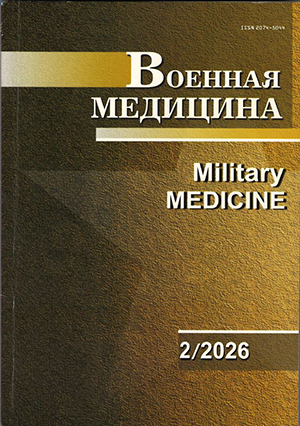
"Military Medicine" is a peer-reviewed scientific and practical journal founded by the Belarusian State Medical University. Published since 2006, it is the first and only specialized periodical for military physicians in the Republic of Belarus. The journal is officially included in the List of Scientific Publications of the Republic of Belarus for the publication of dissertation research results and is indexed in the Russian Science Citation Index.
The journal serves as an authoritative platform for the publication of original research, reviews, and clinical cases on medical tactics in emergency situations, military field surgery, therapy, military hygiene, and epidemiology. The publication is intended for military and civilian practitioners, scientists, postgraduate students, and cadets of medical universities.
Current issue
IMPROVING THE EDUCATIONAL PROCESS
ORIGINAL SCIENTIFIC PUBLICATIONS. Medical and preventive questions
This article examines the dynamic provision of inpatient medical care to patients with chronic obstructive pulmonary disease in Minsk healthcare facilities. From 2021 to 2024, the number of hospitalized patients with chronic obstructive pulmonary disease increased more than threefold. From 2017 to 2024, the average length of stay for patients with chronic obstructive pulmonary disease increased by 7.14 % (from 13.47 to 14.43 days). This increase in the average length of stay for patients with chronic obstructive pulmonary disease may indicate a predominance of patients with more severe forms of the disease, requiring longer inpatient treatment, and entails increased healthcare costs and an economic burden on the state.
This study analyzes significant clinical and laboratory predictors of destructive forms of acute appendicitis (AA). A prospective study included 100 patients with confirmed AA (58 women, 42 men, mean age ± 16.3 years). In 34 patients, gangrenous or perforated forms were diagnosed intraoperatively. A comparative analysis of clinical and laboratory parameters was performed between groups with destructive and non-destructive forms. Patients with destructive forms had a significantly longer history of the disease before hospitalization (34.5 ± 12.8 hours vs. 14.2 ± 6.5 hours in the non-destructive group, p < 0.05), age over 50 years (64.7 % vs. 31.8 %, p < 0.05), higher levels of leukocytosis (17.4 ± 3.1×10⁹/L vs. 12.1 ± 2.8×10⁹/L, p < 0.05), and C-reactive protein (189.5 ± 65.2 mg/L vs. 52.3 ± 28.7 mg/L, p < 0.05). In the group with destructive forms, procalcitonin >0.5 ng/mL was detected more frequently (73.5 % vs. 15.2 %, p < 0.05). The combination of three or more factors (history >24 h, age >50 years, leukocytosis >15×109/L, CRP >150 mg/L) was associated with a high (87.5 %) risk of developing gangrenous or perforated appendicitis. The obtained data demonstrate that a comprehensive assessment of simple clinical and laboratory parameters allows for highly accurate prediction of the risk of destructive forms of AA and contributes to the timely selection of an adequate surgical strategy.
The original results of the assessment of the effectiveness of thrombolysis by alteplaza while an ischemic cerebrum infarction at Minsk City Clinical Hospital Emergency Medical Care are resulted in the article.
Among the 38 most significant diseases on Earth, conditions associated with iron deficiency rank first. Iron deficiency anemia (IDA) is primarily related to nutrition (alimentary). Despite the high level of food availability in the Republic of Belarus and a significant reduction in the percentage of iron deficiency states (IDA and latent iron deficiency – LID) in older children and adolescents, iron deficiency states (IDS) persist in a considerable number of young children.
Since the nutrition of children in the first year of life is provided either by breast milk or infant formula, the aim of this study was to compare the frequency of IDS in breastfed and formula-fed children.
Materials and Methods. A total of 137 children aged five months to one and a half years, treated at the 3rd City Children‘s Clinical Hospital for acute respiratory viral infections (ARVI), bronchitis, pneumonia, and otitis media, were examined. Of these, 76 were breastfed and 61 were formula-fed. A control group of children of the same age (31 children) without iron deficiency was also examined. The main indicators of the complete blood count were compared among these groups: hemoglobin content, red blood cell count, hematocrit, MCV, MCH, MCHC, and color index.
Results and Discussion. The obtained data revealed the following pattern: breastfed children had lower blood hemoglobin levels compared to formula-fed children and compared to the norm, while shifts toward microcytosis and hypochromia indicated iron deficiency. This is explained by the low iron content in human milk (0.35–0.4 mg/L).
Conclusion. Breastfeeding is associated with a high risk of developing iron deficiency states requiring timely and adequate correction.
Introduction. As of 01.01.2024, 379,510 patients with diabetes were under medical supervision in the Republic of Belarus, including 19,252 with type 1 diabetes and 356,396 with type 2 diabetes. The annual increase in the number of patients is 5.0–8.0 %.
The aim of the work is to compare the dental status of patients with type 1 and type 2 diabetes.
Materials and methods. A retrospective analysis of outpatient dental records of patients undergoing outpatient follow-up with an endocrinologist for type 1 and type 2 diabetes mellitus was performed. Patients with type 1 diabetes mellitus (19 patients) made up group 1, which was divided into two subgroups 1.1. – type 1 diabetes without complications (9 patients), 1.2. – type 2 diabetes with complications (10 people); with type 2 diabetes mellitus (20 patients) – group 2, which It was also divided into two subgroups 2.1. – Type 2 diabetes without complications (10 patients), 2.2. – Type 2 diabetes with complications (10 patients).
Results. It was determined that destructive changes in the periodontium with tooth loss prevail in patients with type 2 diabetes, and a greater number of foci of chronic odontogenic infection were identified, which may indicate a greater lesion of the bone structures of the maxillofacial region in people with type 2 diabetes mellitus compared with patients with type 1 diabetes.
Conclusion. The revealed facts should be taken into account when planning therapeutic and preventive measures for patients of this category.
This article examines respondents’ satisfaction with the provision of psychiatric care in outpatient and inpatient settings for patients at high risk of aggressive behavior, with the results varying depending on the level of care provided. The main reasons for dissatisfaction with the organization of specialized medical care for patients with psychiatric problems were staffing (21.4 %), the lack of an effective system for preventing and monitoring aggressive actions of patients (21.5 %), insufficiently effective interaction between organizational structures of psychiatric care and law enforcement agencies (18.4 %) and social services (11.7 %), and the lack of interdepartmental programs for long-term support and reintegration of patients into society (14.7 %), the rating and values of which depended on the level of psychiatric care provided.
This article presents the results of a study on anxiety and coping behavior in adolescents who have achieved remission from oncological diseases (n = 13). The study examines these phenomena in the context of age (early and late adolescence) and gender. A multi-method approach was employed, integrating phenomenological interviews to describe the structure of the participants’ experiences, psychodiagnostic techniques, and physiological measurements using a «Reacor» biofeedback device to record galvanic skin response (GSR) and photoplethysmography (PPG). The findings confirm the existence of significant gender and age-related differences in the experience of anxiety and the utilization of coping strategies. These results can serve as a foundation for developing effective support and intervention programs aimed at managing anxiety in adolescents.
The aim of the study was to determine hystologicchanges of healing of antransversoanastomosis made by interrupted single row seromusculosubmucosal sutures in 30 days after a surgery in the experiment.
Material and methods. During experimental surgery on 6 dogs colonicend-to-end transversoanastomoses were performed with handle interrupted mattress seromusculosubmucosal sutures using vicryl 000 with atraumatic needles. In terms of 2, 6 and 30 days after the operation 99 hystologic specimens of anastomotic wound were examined in order to investigate the healing of the anastomotic wounds, inflammation and terms of mucosal membrane healing.
Results. On 2 days after the surgery inflammation signs and marginal necroses with microabscesses formation in wound edges were determined. Inflammation signs were observed in all tissue layers of anastomotic wound. On 6 days after the operation initial epithelization of anastomotic wound was determined. Regeneration signs and formation of collagenous fibers in the wound area with intensive connective tissue growth and productive inflammation around suture material were determined also. On 30 days after the operation wound epithelization with signs of productive inflammation around suture material was observed.
Conclusion. In our opinion significant destruction of wound edges on 2 day and delayed epithelization on 6 days after the surgery was related to massive bacterial infection of anastomotic wound. Absence of connective tissue in the anastomosis was possible due to anastomosis healing by primary tension. We consider it as advantage of the developed suture.
ORIGINAL SCIENTIFIC PUBLICATIONS. Military epidemiology and hygiene
Research results in the epidemiology of burn injuries indicate a predominance of male victims, who tend to have deeper tissue damage. It can be assumed that this pattern is maintained at certain degrees of burns, in particular, when exposed to one of the most common thermal factors – an open flame. The main causes of these burns were the ignition of wooden materials during fires and campfires, the ignition of flammable liquids (gasoline, solvents, etc.), and household gas. The proportion of male victims with grade IIIA burns was 2.1 times higher than that of females due to more frequent contact with flammable liquids. The average age of victims increased with increasing severity of injury. Men were 1.8 times more likely to be injured while intoxicated than women. In cases of grade IV tissue damage, the relative proportion of male victims was 2.9 times higher. The average length of hospital stay increased significantly with increasing tissue damage depth and showed no statistically significant differences by gender. The overwhelming majority of adverse outcomes (88.3 %) were recorded in patients with fourth-degree burns, with equal frequency among men and women (42.9 ± 4.5 % and 36.9 ± 7.1 %; P > 0.05). Burns were sustained in 36.7 % of patients while intoxicated, with a 1.8-fold higher prevalence among men. As the severity of burn injury increased, so did the average age of the victims and the duration of hospital treatment. The majority (88.3 %) of fatalities were due to fourth-degree burns, with no significant differences in incidence between genders.
REVIEWS AND LECTURES
Cough is one of the most common symptoms experienced by a general practitioner and a general practitioner. The greatest difficulties for practicing physicians are caused by cases of chronic cough and its complicated course.
The range of diseases and pathological conditions accompanied by cough symptoms is extremely wide. This requires both deep theoretical knowledge and practical experience from the clinician in choosing a rational diagnostic search algorithm and optimal therapeutic tactics.
This article is devoted to the problems of pathogenesis, classification, diagnostic approach and therapeutic tactics in cough syndrome.
As the opioid crisis continues to impact communities, developing an effective treatment for opioid addiction is a critical public health challenge. This study aims to explore the use of opioid agonists for the treatment of opioid addiction and examine potential controversies surrounding it.
Treatment of OUD with medication such as Methadone and Buprenorphine has been proven to be effective in the treatment of overdose of opioids. The mechanism of action for these opioid agonists are primarily focused on maintenance of the opioid addiction and detoxification. In the United States Buprenorphine is used for office based treatment, whereas Methadone is provided only in the Opioid usage overdose treatment facility centers.
However, many statistical analyses found that opioid agonist treatment for OUD, can pose a major risk for the public health and safety, potentially causing more harm to the patient than the OUD itself. It is crucial to address the issues of misuse and stigma of medication associated with medication assisted treatment in order to optimize patient care of individuals with OUD.
This article provides a comprehensive review of genetic factors that influence the pharmacokinetics and effects of methotrexate (MTX) in the treatment of juvenile idiopathic arthritis (JIA). It focuses on key genes and polymorphisms associated with MTX metabolism and transport, as well as their impact on the efficacy and tolerability of MTX therapy. The aim of the study is to review the results of genetic studies aimed at finding markers that can influence individual differences in the pharmacokinetics of MTX; to characterize the most well-studied genes involved in the pharmacogenomics of MTX and candidate genes in patients with JIA. The article analyzes the results of genetic studies published by leading international professional communities of specialists in this field. Information was searched in the PubMed and eLibrary networks.RU, Google Scholar, ClinPGx, by keywords.
Sarcoidosis is a systemic inflammatory disease which clinical manifestations mimic the signs of other pathologies. The authors of the article provide the analysis of musculoskeletal manifestations of sarcoidosis from the perspective of a rheumatologist. Signs from the musculoskeletal system, characteristic of sarcoidosis and rheumatic diseases, are arthropathy, myopathy and bone involvement. Special attention is paid by authors to the possibility of combining sarcoidosis and rheumatic diseases in the same patient. Difficulties of diagnosing are associated with ambiguity of the results of clinical examination, laboratory tests and instrumental studies. Biopsy plays an important role in the diagnosis of sarcoidosis. The article presents distinctive clinical, laboratory and histological signs of the rheumatic diseases in comparison with sarcoidosis. Immunological markers of systemic connective tissue diseases are very helpful for establishing the diagnosis. The article outlines the principles of differential diagnosis of sarcoidosis and rheumatoid arthritis, axial spondyloarthritis, psoriatic arthritis, ANCA-associated vasculitis, systemic lupus erythematosus, systemic sclerosis, primary Sjogren’s syndrome, IgG4-associated disease and inflammatory myopathies. The authors substantiate the importance of using a multidisciplinary approach to diagnosis and raising doctors’ awareness of the clinical manifestations of sarcoidosis and rheumatic diseases.
TO HELP THE MILITARY DOCTOR
First aid training of medical students in an international educational environment is associated with certain risks arising from the lack of unified requirements for the composition of universal first aid kits.
Objective. To analyse national characteristics in the development of universal first aid kits and to identify methodological approaches for training international medical students, taking into account the 2025 European and American first aid guidelines.
Materials and methods. A comparative analysis was conducted of regulatory documents governing the composition of universal first aid kits: the Republic of Belarus (Resolution of the Ministry of Health of the Republic of Belarus No. 178 of 23 November 2023, with amendments in 2024), the European Union (DIN 13157:2022), and the United States (ANSI/ISEA Z308.1-2021). The composition, structure, and mandatory components of first aid kits were assessed, and key trends were identified.
Results. Significant differences in approaches to first aid kit development were identified. In the Republic of Belarus, a medication-based model predominates, including medicinal products and medical devices; in Europe and the United States, a non-medication-based model prevails, with an emphasis on dressings.
Conclusions. Pronounced national differences exist in the composition of universal first aid kits, while unified criteria for assessing the effectiveness of different approaches are currently lacking. These differences should betaken into account when developing educational programmes for international medical students, particularly with regard to the safe and rational use of medicinal products. Adherence to international first aid guidelines may reduce the risk of errors when providing first aid under differing national standards.
The article presents a comparative assessment of the technical and operational characteristics of flexible immobilization splints available on the market of the Republic of Belarus. The relevance of using these tools at the prehospital stage in modern armed conflicts is substantiated. The results of an X-ray examination confirming the X-ray negativity of all tested samplesarepresented. It is concluded that it is expedient to prioritize purchases of local products (OJSC «Svetlogorsk-Khimvolokno») within the framework of the import substitution program.
COMBAT SURGICAL TRAUMA
Infectious complications remain the leading cause of mortality and prolonged hospitalisation in military personnel sustaining mine-explosive trauma (MET). The aim of this study was to analyse the current spectrum of infectious complications of MET, evaluate the aetiological structure of wound pathogens, and determine rational principles of antimicrobial prophylaxis and therapy. A systematic review of 18 scientific publications from 2012–2025 was performed. Infectious complications were found to develop in 27–35 % of combat casualties and in 52 % of those sustaining traumatic amputations. In contemporary conflicts, the dominant pathogens are multidrug-resistant Gram-negative bacteria– Acinetobacter baumannii, Klebsiellapneumoniae, and Pseudomonas aeruginosa – with carbapenem resistance rates reaching 73–90 %. The cornerstone of antimicrobial prophylaxis remains prompt cefazolin administration per TCCC protocol; radical wound debridement is essential for infection prevention. The spread of multidrug-resistant organisms from conflict zones constitutes a global epidemiological threat.
COMBAT THERAPEUTIC TRAUMA
The article presents modern ideas about traumatic illness – the concept and definitions, classification, the main mechanisms in the development of the disease, approaches to diagnosis and the basic principles of the organization of medical care at the stages of medical evacuation.
Concepts such as «visceral pathology in the wounded and affected of wartime» and «visceral pathology of wartime» should be distinguished and distinguished. It is also necessary to understand and highlight the role of a general practitioner in the treatment of visceral pathology in the wounded and those affected by traumatic illness. New periods have now been identified, pathogenesis, methods and techniques in early diagnosis and stage-by-stage treatment of traumatic illness have been supplemented.
Due to the frequent cases of attacks using unmanned aerial vehicles and precision weapons on residential and industrial facilities in the Russian Federation, the number of injured and injured has increased. The ongoing tense situation near the state border of the Republic of Belarus with an increasing likelihood of such incidents on our territory requires good training of medical workers in the knowledge of visceral pathology in traumatic illness.
CASE FROM PRACTICE
Kawasaki syndrome (SC) is an acute systemic disease involving small and medium-sized arteries with the development of proliferative vasculitis. The main number of cases are children under 1 to 5 years of age, while the disease is extremely rare in children in the first months of life. Currently, there is an increase in IC all over the world. The problems of diagnosis of SC are associated with the rare occurrence and absence of pathognomonic symptoms and laboratory criteria of the disease, which leads to underdiagnosis of the latter. SC can pose a threat to the patient’s life and health not only in the acute period, but also after many years, which is associated with the risk of coronary artery aneurysms in patients who have not received adequate pathogenetic therapy, namely, the administration of intravenous immunoglobulins (IVIG). Meanwhile, timely diagnosis and administration of IVIG can reduce the risk of aneurysm formation from 25 % to 4 %. As is known, the presence of coronary artery aneurysms suggests life-threatening complications in the form of thrombosis and/or stenosis, which can lead to ischemia and sudden death at a young age. At the same time, the awareness of doctors of the therapeutic profile regarding the UK is insufficient. The article considers a case of Kawasaki disease in a three-month-old child, analyzes in detail the course of the pathological process.
The article describes the symptoms of mental disorder called simulation. It is shown that in patients in clinical picture it is not just a deliberate simulation, but а way to get rid of the exhressed anxiety, which they themselves are unable to cope with. Certain (specific) parallels with obessive-compulsive disorder are performed.
BRIEF MESSAGES
HISTORY OF MILITARY MEDICINE
Zinovy Petrovich Solovyov is an outstanding organizer of Soviet healthcare. Much has been said about Solovyov as an organizer of healthcare, as the founding father of the Artek pioneer camp, as a Bolshevik revolutionary, as a member of the Russian Red Cross Society (ROCC), as the head of the Department of Social Hygiene at the 2nd Moscow State University Medical Faculty, as an epidemiologist at the provincial Zemstvo the councils. However, the article will discuss him as a divisional doctor and his activities as head of the Main Military Sanitary Directorate of the Red Army in the period from 1920 to 1928.
This article examines the organization of medical support for the Mogilev garrison during the city’s heroic defense (July–September 1941) using documented eyewitness accounts and data on the structure of military medical institutions. The article examines the deployment and operation of field hospitals and medical battalions during the encirclement and occupation until November 1941. The relationship between the capacity of medical institutions and the actual losses suffered by the city’s defenders is analyzed. It concludes that the actual number of wounded treated during the defense differs significantly from a number of testimonies from participants in the events.




